×

The Standard e-Paper
Stay Informed, Even Offline
 The Standard Group Plc is a
multi-media organization with investments in media platforms spanning newspaper
print operations, television, radio broadcasting, digital and online services. The
Standard Group is recognized as a leading multi-media house in Kenya with a key
influence in matters of national and international interest.
The Standard Group Plc is a
multi-media organization with investments in media platforms spanning newspaper
print operations, television, radio broadcasting, digital and online services. The
Standard Group is recognized as a leading multi-media house in Kenya with a key
influence in matters of national and international interest.
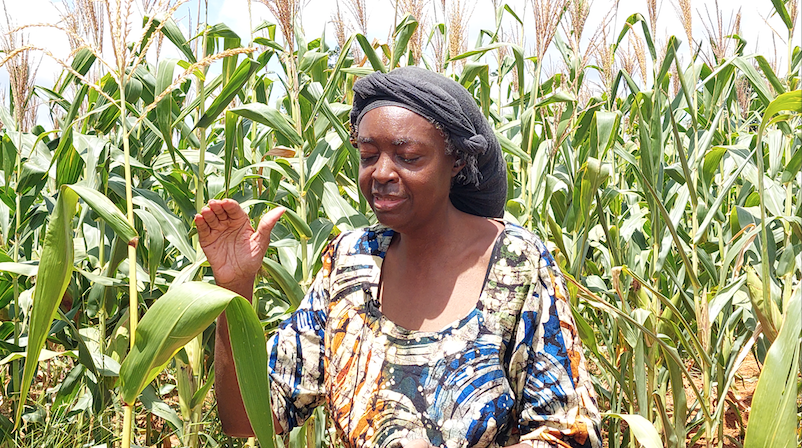
Dr Lusike Waswila at Mutwota's farm. [Japheth Makau]
Welcomed by green rows of maize-an indication of a bumper harvest in Maikua village, Kithangaini location, Mwala constituency, Machakos County, which is a dry area-at Josephat Mutwota's farm, one couldn't believe he was at the heart of Ukambani. This success has been achieved through a project by the Kenya Agricultural and Livestock Research Organization (Kalro) training e-farmers in the area on good agricultural practices and the management of the fall armyworm.
Mutwota, who is the acting chairperson of Kyeni Self Help Group, says for the first time in many years, he is expecting a good harvest from his three acres of maize farm. "I am expecting to harvest at least 15 bags of maize from an acre. This will be a first for me because normally, I get five or fewer bags of maize due to poor rains," he said.
He grows maize and pigeon peas, and he said this year's maize crop has been productive because there was no attack from the fall armyworm unlike in the past seasons. He has planted the OKAMES (KDH-414) maize variety that is suitable for the area, and the rains were good, so they are expecting a bumper harvest.
He also attributed the good harvest to training on proper agricultural practices and pest management that farmers from the group have received from KALRO researchers. Mutwota said they have been trained on scouting and monitoring pests in their farms, and the proper use of pesticides to ensure food safety. "This also ensures that they do not spray pesticides and kill other useful insects in the soil and the environment. We have also been trained on the importance of spacing of crops and crop rotation," he said, adding that farmers should also ensure they plant using certified seeds.
"This year, there will be no shortage of maize in Ukambani because most farmers will have a good harvest," Mutwota said.
According to Dr Muo Kasina, a pest management specialist with Kalro, when the FAW invaded Kenya in 2017, there was a major outcry from farmers on how to manage the pest. "This is because previously, there was no major form of pest management particularly pesticide use for maize. So when the pest came in, it was new, resistant to various insecticides, and it attacked maize at a time when maize farmers were not experienced in managing pests," he explained.
To help farmers cope with the problem of the Fall Army Worm, researchers from 16 African countries in partnership with the Korean Government came together in 2022 to develop an African-wide programme on the management of the pest using sustainable methods. "Sustainable methods contribute to food security because maize is one of the food and nutrition security crops that Kenyans and Africa depend on," he said.

Subscribe to our newsletter and stay updated on the latest developments and special offers!











 join
join