×
App Icon
The Standard e-Paper
Read Offline Anywhere
★★★★ - on Play Store
Download Now

New Unicef, Standard Chartered programme targets jobs for young women

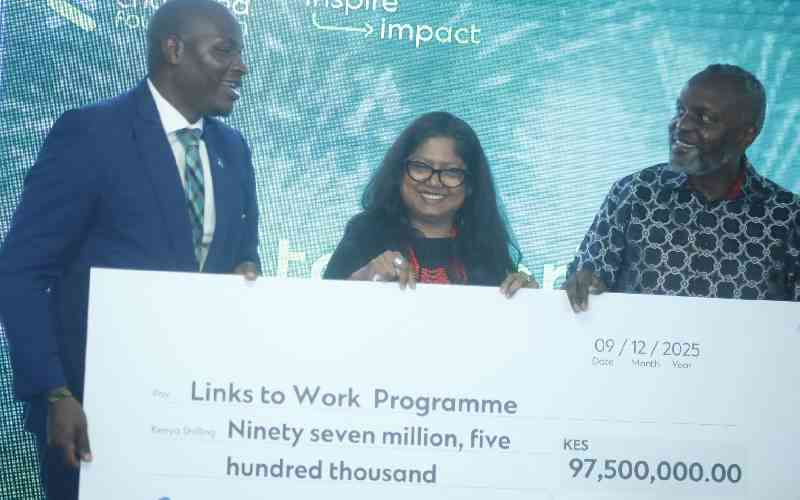
Standard Chartered Bank CEO Kariuki Ngari (right), UNICEF country representative Shaheen Nilofer (center) and Innovation manager Charle Otine during the launch of Links to Work Programme in Nairobi, on December 9, 2025. [Collins Oduor, Standard]

Kenya’s youth continue to face one of the toughest job markets in the region, despite making up the majority of the population.

About 75 per cent of Kenyans are under the age of 35, yet youth unemployment stands at 67 per cent.

Young women are the most affected, with global data showing that two in three young people who are not in education, employment, or training are female.


Every year, more than one million young people leave school or training and enter the labour market, many lacking the skills employers require, making the transition from learning to work particularly challenging.

To address this gap, the Standard Chartered Foundation and UNICEF’s Generation Unlimited (UNICEF GenU) have launched the ‘Links to Work’ programme.

This three-year initiative aims to support young women aged 18 to 24 in gaining practical skills, mentorship, and access to job opportunities. The programme will target 1,500 young women in Kenya and Nigeria, backed by a Sh195 million investment, with Sh97.5 million allocated to Kenya.

Speaking at the launch, Standard Chartered Kenya and Africa CEO Kariuki Ngari said the programme is designed to strengthen both employability and confidence among young women entering a competitive job market.

“When you walk into an interview, you often have just fifteen minutes to leave an impression. Programmes like this give young women the edge they need to stand out,” he said.

He added that the bank’s role is to bring partners together and ensure beneficiaries receive quality training.
“We focus on women because when women have income and stability, entire communities stabilise,” he noted.

UNICEF Innovation Manager Charles Otine highlighted the timeliness of the initiative given Kenya’s demographic trends.

“Seventy-five per cent of the population are under 35, and more than one million young people enter the job market each year without the skills employers need,” he said. Otine emphasised that young women face the highest barriers, from limited networks to a lack of mentorship.

“This programme will help them gain job-readiness skills, guidance, and mentorship so they can transition into real employment,” he added.

Joyce Kibe, Standard Chartered’s Head of Corporate Affairs, Brand and Marketing for Kenya and Africa, explained that while the foundation has run several youth empowerment initiatives, this programme specifically prioritises young women entering the workforce.

“We target women aged 18 to 24 and provide opportunities to get employment in the private, public, and development sectors,” she said.
“Women form about half of the youth population, and this programme gives them the networks and confidence they need to start their careers.”

Graca Mwavita, a youth beneficiary and a graduate of a related skills programme, shared how structured mentorship and technical training helped her secure work as a Systems, Applications and Products in Data Processing (SAP) implementation consultant.

“Learning enterprise systems opened a door I didn’t even know existed. This programme works. If it shaped my journey, it will do the same for the young women who come after me,” she said.

Vanessa Wambui, a Youth Agency Marketplace (Yoma) Hub Coordinator working with young people in informal settlements, highlighted the potential unlocked when youth receive proper support.

“Young women come with determination even in the toughest environments. When you give them the right facilities and guidance, the change is immediate,” she said. “They become the architects of the Africa they dream of.”

Dr Shaheen Nilofer, UNICEF Kenya Country Representative, said the initiative reflects a broader commitment to investing in Kenya’s young people.

“The stories we’ve heard today show why investing in youth is non-negotiable,” she said. “When we invest in the potential of Kenya’s youth, we are investing in the country’s human capital and long-term inclusive growth.”

The programme will provide career assessments, job-readiness training, mentorship, and direct support to help young women secure decent work across multiple sectors. Recruitment will take place nationally, with priority given to young women facing the greatest barriers to employment.

“UNICEF Kenya is proud to partner with the Standard Chartered Foundation to support young women in gaining access to skilling and decent work opportunities,” said Dr Nilofer.

“This initiative complements the National Youth Opportunities Towards Advancement programme recently launched by the Government of Kenya with support from the World Bank, which aims to tackle youth unemployment over the next five years.”

Kariuki Ngari added, “This partnership reflects our strategic commitment to unlocking economic opportunity for young people through decent employment. By combining UNICEF’s extensive skilling ecosystem with our employability focus on work readiness and vocational training, we are building a model that connects talent and training to real jobs.

“Securing decent work opportunities is the foundation for strengthening local economies, deepening private sector participation, and fostering long-term, inclusive growth.”