×

The Standard e-Paper
Home To Bold Columnists
 The Standard Group Plc is a
multi-media organization with investments in media platforms spanning newspaper
print operations, television, radio broadcasting, digital and online services. The
Standard Group is recognized as a leading multi-media house in Kenya with a key
influence in matters of national and international interest.
The Standard Group Plc is a
multi-media organization with investments in media platforms spanning newspaper
print operations, television, radio broadcasting, digital and online services. The
Standard Group is recognized as a leading multi-media house in Kenya with a key
influence in matters of national and international interest.

Audio By Vocalize
Kenya’s embrace of international education has accelerated over the past decade, and the surge in IGCSE and A-Level enrollment is no longer a fringe trend. It is reshaping how families think about schooling, mobility, and opportunity. Yet even as schools celebrate rising pass rates and expanding programs, the country has not fully confronted what this shift means for equity, national cohesion, or the future of our local education ecosystem.
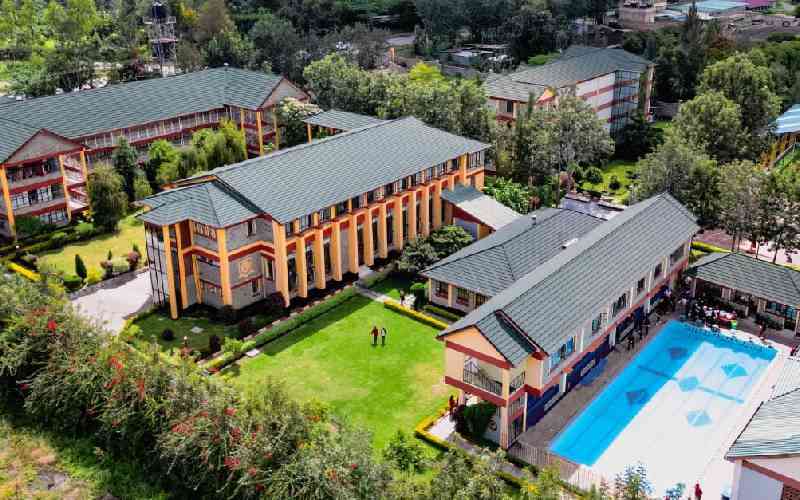
As someone working within an international school environment, I have seen firsthand the confidence that families place in global curricula. At Brookhurst International School, for instance, our IGCSE and A-Level classes have registered strong performance, including a 98 percent pass rate and a 100 percent pass rate in our inaugural International Foundation Diploma class. Students have also posted solid results in Year 6 and Year 9 checkpoint exams, a sign of how early preparation influences later success.
These outcomes matter, but they tell only part of the story. The broader question is why more Kenyan families are choosing IGCSE and A-Levels, and what it signals about the faith parents have, or do not have, in the national education system.
Why IGCSE and A-Levels appeal to Kenyan families
Globally recognised qualifications hold obvious advantages. IGCSE and A-Level programs are widely accepted by universities and employers, and they emphasise analytical thinking, research, practical application, and independent learning. These qualities resonate with families seeking an education system that feels aligned with an increasingly interconnected world.
The structure itself is part of the appeal. IGCSE offers breadth, giving students room to explore sciences, arts, humanities, and languages before narrowing down to three or four specialisations at A-Level. This mirrors university systems in the UK and beyond, which many Kenyan students aspire to join.
But the preference is also a quiet commentary on concerns many parents hold about rigid teaching methods, overcrowded classrooms, and inconsistent quality control within some strands of the national curriculum. International programs, by design, emphasise smaller classes, continuous assessment, and project-based learning—elements parents find responsive to the needs of modern learners.
The hidden costs of a shift toward international curricula
The rise of international schooling, however, comes with contradictions. These programs remain inaccessible to the majority of Kenyan families due to cost, location, or limited capacity. While schools tout strong results—and these accomplishments shouldn’t be dismissed—they also reflect the advantages that come with resource-rich environments: subject specialists, modern facilities, academic counsellors, tutoring systems, and structured pastoral care.
At Brookhurst, for example, we offer personalised learning plans, small classes, targeted interventions, and mental health support. These are vital tools for student success, but they raise a necessary question: What happens to the wider system when quality becomes a privilege of the few?
Checkpoint exam achievements and high pass rates speak to the success of individual schools, not to a level playing field. The more Kenyan families turn to international options, the more pressure mounts on national policymakers to confront disparities in access, funding, and teacher support.
What international schools get right—and what Kenya can learn
Even critics of international schooling acknowledge that IGCSE and A-Level structures emphasise understanding rather than memorisation. They encourage real-world engagement through experiments, essays, research projects, and analytical tasks. This stands in contrast to systems where exam preparation sometimes overshadows applied learning.
International schools also prioritise holistic development. Leadership programs, extracurricular activities, student support services, and character-building initiatives encourage independence, resilience, and self-motivation—qualities critical to success in adulthood.
Stay informed. Subscribe to our newsletter
These advantages shouldn’t remain exclusive to one segment of the education market. Kenya can draw lessons from the flexibility, creativity, and student-centered design found in international curricula, without discarding the importance of its own national education identity.
Preparing students for a future that is already here
Regardless of curriculum, today’s students face a world where competition is global and opportunity is fluid. What gives them an edge is not just the certificate they earn, but the skills they carry with them—critical thinking, adaptability, curiosity, and empathy.
This is where international programs have resonated. In schools like ours, the combination of rigorous academics and sustained support helps students build strong foundations early. By the time they sit their IGCSE exams in Year 11 or advance into A-Levels, the habits that drive success—time management, research ability, problem solving—are already ingrained.
Still, this raises another point of reflection: Shouldn’t every Kenyan student, regardless of socio-economic background, have access to an education that centres on these strengths?
The national conversation that Kenya must have
Celebrating high pass rates is important, but it cannot be the end of the story. Kenya needs a more honest conversation about the role of international education in society. Are international schools complementing the national system, or are they becoming a quiet exit route for families who feel left behind? What does it mean for our social fabric when education pathways begin to diverge so sharply?
If international curricula continue to expand, the country must ensure that this growth contributes to, not replaces, efforts to improve the quality and relevance of national schooling. A dynamic society cannot afford a two-tiered system where opportunity tracks along economic lines.
Beyond grades
For students who walk through our doors at Brookhurst, the journey is about more than grades. They grow into confident, articulate, and capable young people who can navigate complexity. They learn independence, creativity, and resilience. These transformations matter deeply.
But the long-term impact of IGCSE and A-Level programs in Kenya will be measured not by the success of individual schools, but by how well the country ensures that all its learners, and all its curricula, benefit from the same principles of good education: curiosity, competence, and character.
Only then can Kenya truly claim an education system that prepares every child for the future they deserve.
Riqui Nderitu is the Outreach and Communications Lead at Brookhurst International Schools.
Subscribe to our newsletter and stay updated on the latest developments and special offers!










 join
join