×
App Icon
The Standard e-Paper
Truth Without Fear
★★★★ - on Play Store
Download Now

Over 200 girls trained on FGM, early marriage in Marsabit

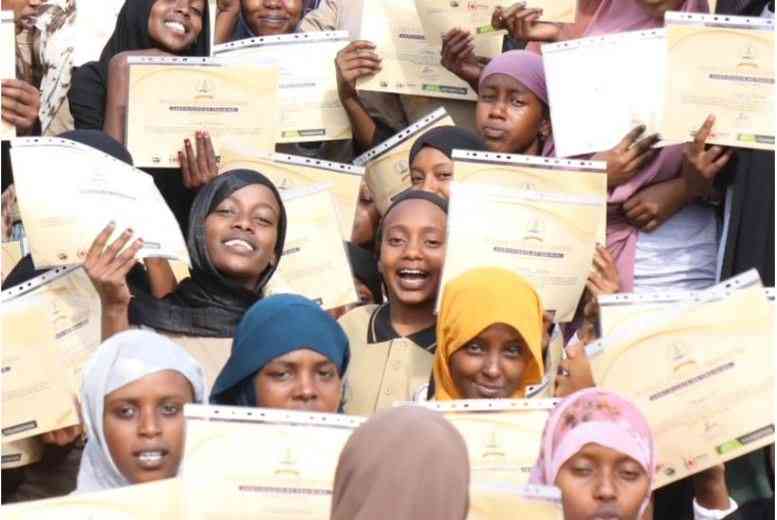
Girls display their certificates after completing a five-day training on FGM and early marriage in Moyale, Marsabit County. [Courtesy]

More than 200 girls have graduated from a five-day empowerment camp aimed at tackling female genital mutilation (FGM) and early marriage in Marsabit County.

The girls, drawn mainly from rural villages in Moyale Sub-county, took part in the 12th edition of the Gadis Game programme, held at Moyale Girls Secondary School. The initiative focuses on girls’ rights, menstrual hygiene, leadership, environmental conservation and protection from harmful cultural practices.


Speaking during the graduation ceremony, Marsabit Governor Mohamud Ali said the programme was timely, noting that many girls face increased risks during school holidays.

“The girls have used their holiday well. They have learned about their rights and gained skills that will help them make better choices,” the governor said, urging them to share the knowledge within their communities.


The programme was started in 2018 by Marsabit First Lady Alamitu Guyo Jattani as a response to the high prevalence of FGM and early marriage in the county. Since its inception, more than 3,400 girls across Marsabit have benefited.

Ms Jattani said harmful practices persist despite ongoing campaigns, largely due to resistance from some parents and community members.

“FGM is an outdated practice that puts our girls at risk. We must continue engaging women and families to end it,” she said, adding that the programme would continue to expand.

According to the Kenya Demographic and Health Survey, parts of northern Kenya still record some of the highest FGM rates in the country. Wajir leads with a prevalence of 97.2 per cent, followed by Mandera at 95.9 per cent and Marsabit at 83 per cent. In contrast, counties such as Busia report rates as low as 0.1 per cent.

A UNICEF report shows that while Kenya has made progress in reducing FGM among girls aged 15 to 19, from 26 per cent three decades ago to nine per cent, more than four million girls and women in the country have already undergone the practice. Across Eastern and Southern Africa, 42 million girls and women have been cut, nearly one in five of all cases worldwide.

Kenya outlawed FGM in 2011. The law criminalises performing, aiding or abetting the practice, as well as possessing tools used for mutilation. Offenders face a minimum of three years in prison or a fine of Sh200,000, or both. If a girl dies as a result of FGM, the offender can be sentenced to life imprisonment.

Community leaders at the event reiterated the need for collective responsibility. Chief Heilu Mohamud Mohamed warned that enforcement of the law would be strengthened, while elders called on women to stop supporting the practice.

Parents and local activists welcomed the initiative, saying it had given girls confidence to speak out and prioritise education.

As the graduates returned to their villages, organisers said the aim was for them to become advocates for change, helping to protect other girls from FGM, early marriage and gender-based violence.