Your are here  » Home   » Editorials

Call termination rates need to come down

Updated Thursday, August 16th 2012 at 00:00 GMT +3

Stakeholders in the mobile industry recommended in May that the amount of money telecom companies pay each other for calls that terminate in a rival’s network be reduced from Sh2.21 to Sh1.60, but industry regulator, the Communications Commission of Kenya (CCK), has up to now failed to ratify the decision.

We cannot tell why the commission has opted to stall on the issue, and can only suppose that the procrastination may have to do with partisan interests at play, and possibly reluctance by a section of the Government to support it because of concerns over potential revenue lose.

It should be pointed out that the policy in favour of reduced rates represents the consensus of mainstream industry players. Three months ago, stakeholders held a meeting and deliberated on the issue and those who attended settled on the new rates.

Although decisions taken collectively by industry stakeholders are binding, they do not carry any legal authority.

That is why the sector has been looking up to the CCK to endorse the decision to reduce the rates referred to as Mobile Termination Rates (MTR) and give it the legal authority it requires to take effect.

Elusive truth

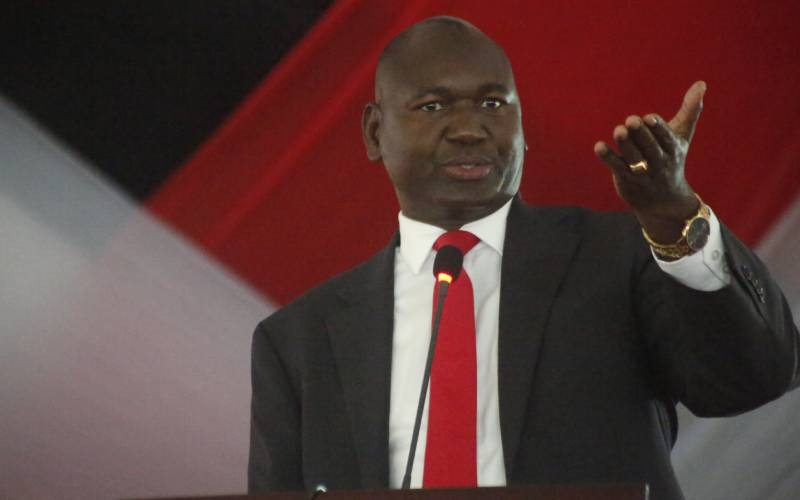
Last month, Information and Communications PS Bitange Ndemo promised that the CCK board would sit and endorse the new rates before end of July, but this never happened.

Only the CCK knows where the truth lies, but from where we stand, we feel the commission has been too lackluster about this issue, given its importance to the mobile industry.

It is especially heart wrenching to note that some of these firms had factored the reduced rates in their growth strategy. This is why the delay in implementation could be hurting their bottom lines and future growth prospects.

There’s been speculation that some people, or even corporates with partisan interests, could be trying to sabotage the deal. It is perfectly understandable if some players in the industry do not relish the idea of having reduced termination rates, since they have their own interests to protect. However, consumers will be disappointed if CCK hesitates to make a decision on an issue of much public interest by succumbing partisan interests. Being the industry regulator, the commission has a duty to look out for everyone’s welfare and act best in the interest of the public.

But it is also important for the telecos who badly need the rate cuts to review their business strategies and make the kind of hard choices necessary to return to profitability. Rate cuts alone will not keep them afloat and the next twelve months is likely to see a drastic realignment of the business to reflect growth areas. Price wars on calling rates for instance are no longer effective since voice market revenues started to decline.

For the record, it is prudent to point out that the industry was initially bound by a glide path, which clearly mapped out a reduction in call termination rates over a three-year period. The rates were to decline and finally settle at 86 cents, but this was disrupted last year following a presidential decree that suspended the implementation of the glide path.

GO TO PAGE 1 2 Next »
Comments in chronological order (Total 0 comments)


1100 characters remaining
 
Top headlines

Catfight between Senate and MPs not in the public’s interest

It is not a wise person who takes on a good lawyer. In fact, it is not a very wise person who takes a verbal slugfest to a seasoned courtroom juggler, commonly called senior counsel for there can be only one outcome. Listening to the Senators and Members of the Eleventh Parliament trade a messy tirade and threats to bring the other down came out like a schoolyard altercation.

Google+

Popular on Facebook

KCB 41.00 0.00
COOP 17.00 0.05
KPLC 17.15 0.15
ARM 70.00 1.00
EQTY 35.00 0.50
HFCK 25.50 0.00
KAPC 125.00 -1.00
KENO 10.95 0.15
KQ 11.30 0.00
MSC 4.45 0.05
SASN 13.50 -0.05
SCOM 7.25 0.00
Watch KTN Live Listen to Radio Maisha Live