By Amos Kareithi
In life, the British employed all tricks in the books to control his influence. They did nothing as a simple case of dysentery drained him, reducing his body to a shell similar to that of an old shaky man.

This was a man who had for years been regarded as the Government’s most trusted ally, a man who provided reinforcements when needed to subdue rebellious communities. They even paid him a salary and treated his signature, an illiterate mark, as priceless asset. But as he lay dying, the Government simply monitored his worsening condition from afar, never providing transport to a health facility or medication.
![]() |
|
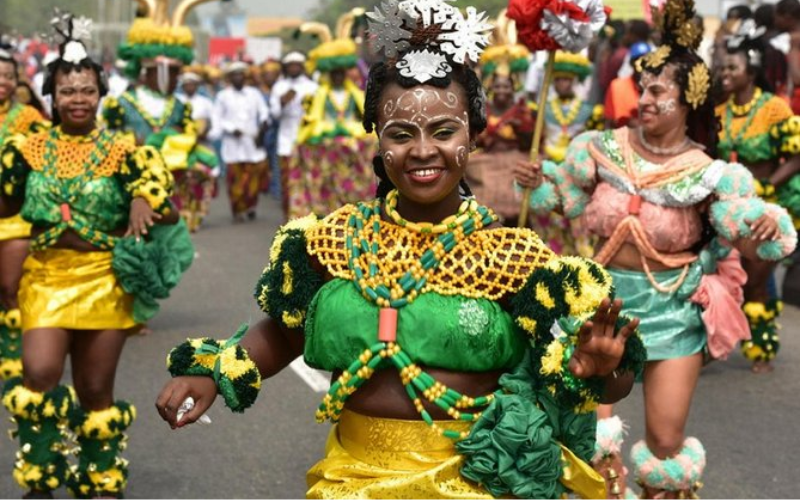
Morans perform a traditional dance. |
[Photo: File/Standard]
After all, the paramount chief, Lenana son of Mbatian did not qualify for the medical scheme and so no vehicle could be availed to fetch him from his home, a mere 16 kilometres from Kiserian to Nairobi. Inevitably, when Lenana finally succumbed to the disease on March 7, 1911, senior Government officials rushed to view his body, including Girouard Percy, the then governor of the East African Protectorate.
They were now paying glowing tribute to the fallen chief, a man who had prematurely aged due to hard living: at 40 years, he looked weak and ancient. The British beseeched the grieving community to respect the Laibon’s death wish.
The Government officials claimed that Lenana’s last wish had been for the Maasai to move away from Laikipia so as to pave way for the establishment of the White Highlands, exclusively occupied by the white settlers.
No ordinary herdsman
The intriguing life of Lenana, (corrupted from Olonana) started in 1870, when one of the 100 wives of Mbatian gave birth to a baby boy at Ngoshua, near Monduli at the foothills of Mt Kilimanjaro, Africa’s highest snow peaked mountain. Although Lenana was born in a home with many children, he was an only son to his mother, in a community where sons were held in high esteem.
Mbatian was not an ordinary Maasai herdsman as he occupied a central place in the life of the community. He was a Laibon, upon whom the prosperity of the community depended with precise predictions.
Mbatian was a descendant of the famous Inkindongi, the man with prophetic powers who had wandered into Maasai land by chance. Inkindongi is believed to have wandered into Ngong in 1640 where he got lost and was rescued by a herdsman who handed him over to Ilaiser clan. Other prominent descendants of Inkindongi included Supet, Sitonik, Kerika, Kipepeti, Parinyombi, Mweiya and Lesigereishi.