Your are here  » Home

Challenges of raising deaf-blind children

Updated Saturday, August 11th 2012 at 00:00 GMT +3

GLANCE FACTS

Deaf-blindness has over 70 known causes. Some of the causes are Usher Syndrome, Cytomegalovirus (CMV), complications due to prematurity, meningitis, encephalitis and asphyxia, as well as traumatic head injuries including shaken baby syndrome.

No two children with deaf-blindness are alike. The combination of possible vision and hearing losses is very different from child to child. Often these children have additional challenges such as cognitive delays, motor delays, and medical conditions.

However, only a small percentage of children who are deaf-blind are without any sight or hearing. Most have some useful vision and/or hearing.

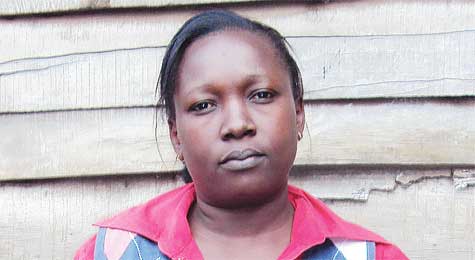
Caroline Mueni, [Photos: Nanjinia Wamuswa/Standard]

The arrival of a new baby is the beginning of a joyous experience for many mothers, however, when the child is born with a rare disability, it marks the start of a torturous journey, writes NANJINIA WAMUSWA

It is every mother’s wish to give birth to a bouncing baby at the end of her pregnancy and subsequent good health, which leads to smooth parenting.

However, this is not always the case when a child is born with rare conditions such as dual-sensory impairment, commonly known as deaf-blindness.

This is a unique disability, which may only seem as inability to see or hear, but in reality deaf-blindness is a condition in which the combination of hearing and visual losses in children causes such severe communication and other developmental and educational needs that they cannot be accommodated in special education programmes solely for children with deafness or children with blindness.

“To comprehend this predicament, a person who is deaf- blind has a unique experience of the world. For people who can see and hear, the world extends outward as far as his or her eyes and ears can reach. For the young child who is deaf-blind, the world is initially much narrower. If the child is profoundly deaf and totally blind, his or her experience of the world extends only as far as the fingertips can reach,” says Dr Eugene Musungu.

For Caroline Mueni, despite her abounding love for her deaf-blind son, his arrival changed her life forever.

“My deaf-blind son has cost me two marriages and perhaps any other that could be on the way,” Caroline begins.

She gave birth to Antony Gichore in 1997 and a week after his birth he had not opened his eyes. She took him to MP Shah Hospital and was referred to Kikuyu Eye Hospital where a growth was discovered in both of his eyes.

Overdose

Three years later, Gichore contracted pneumonia and after receiving treatment at a private hospital, he became immobile. Caroline rushed him to Kenyatta National Hospital and was told the baby had been given an overdose of quinine, resulting in complete lose of speech and sight. He was declared deaf-blind.

More complications that required regular hospitalisation began, which had heavy financial implications on the family. This caused her husband to resolve to kill Anthony so as to end their tribulations.

“I resisted. He insisted that we kill Anthony and remain married or I let him live and he leaves us, but I declined. He left and that is the last we saw and heard from him,” remembers Caroline.?

GO TO PAGE 1 2 3 4 Next »
Comments in chronological order (Total 0 comments)


1100 characters remaining
 
Google+

Popular on Facebook

ACCS 9.55 0.00
ARM 63.00 -1.50
BAMB 212.00 -4.00
BAT 540.00 -37.00
BAUM 11.10 0.00
BBK 16.30 -0.45
BERG 57.00 1.00
BOC 115.00 0.00
C&G 23.00 0.00
CABL 14.35 0.00
CARB 142.00 2.00
CFC 65.00 -3.00
Watch KTN Live Listen to Radio Maisha Live