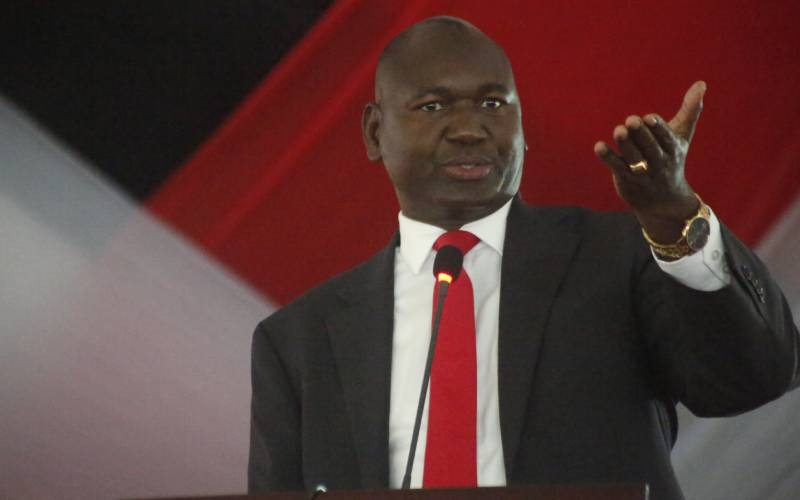
BY PROF R INDIATSI NASIBI
In a February 2003 edition of Newsweek, Professor of History at Yale University, Paul Kennedy, said, “the US military budget will soon be equal to that of all countries in the world combined.”

Yet even now, hawkish policy makers in Washington are concerned that the US defence forces are dangerously thin and overstretched. So how can both facts be true?
And, a book by Martin Jacques, When China Rules the World provides adequate and, precise answers to economic rise in Asia.
The book is a compelling and thought provoking analysis of global economic trends that defies the common western assumptions: that to be fully modern, a nation must become democratic, financially transparent and legally accountable.
Jacques argues persuasively that China is on track to take over as the World’s dominant power and that when it does, it will make the rules on its own terms, with little regard for what existed before.
Even before Jacques’ analysis, The Economist magazine had pointed out that China was growing at a tremendous rate. In 2009 when the G7 economies declined by 3.5 per cent and the US GDP fell by 1 per cent, China’s grew by 15 per cent, Korea’s by almost 10 per cent and Singapore’s by 21 per cent.
This was despite the prediction from the International Monetary Fund in May that year that Asia’s economies would be weak and tepid due to economic downturn in the west.
It was clear then that forecasters in the west underestimated the ability of Asian tigers to rebound from recession.
Prof Mike Buchanan, an economist with Goldman Sachs, took exception to this underrating, saying that he expected China’s economy to grow by 9.4 per cent in 2008 and 11.9 per cent in 2010.
Perhaps I should conclude this debate by what economist Lawrence Lau said when he intimated that China’s GDP will equal that of United States in 2026. Elsewhere, others predicted that by 2040 China’s economy would have surpassed the US. They cite China’s advances in space, oil exploration in Africa and other deals as reasons for this advancement.
In 2004, China overtook Japan to become the world’s second largest oil importer-trailing only the United States. Now China is in Africa and everywhere for the energy resources it requires to feed its feverish growth of more than 10 per cent annually.