Your are here  » Home   » Eve Woman

Ensuring a healthy mother and child

Updated Sunday, July 22nd 2012 at 00:00 GMT +3

Philips, in collaboration with the Standard Group, has come up with an initiative to reduce maternal and infant mortality in Kenya, writes GARDY CHACHA

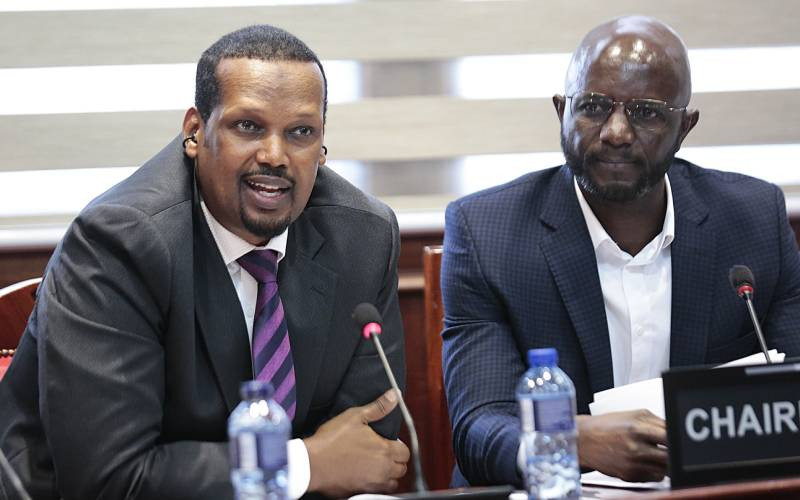
Four decades after independence, cases of maternal and infant mortality are still on the rise. It is for this reason that Philips, in partnership with the Standard Group and KTN, organised a panel discussion with experts, students, government representatives, private practitioners and parents to find solutions to improve mother and child care. This in an effort to meet the Millennium Development Goals (MDGs) four and five: Reducing by half the under-five mortality rate and reducing by three quarters maternal mortality ratio.

The discussion, which was aired on KTN on Wednesday, dwelt on better practices and ethics in healthcare with a focus on the health of mother and child.

Dr Isaack Bashir, the Director of Public Health in Kenya, represented the Government.

“The leading causes of infant deaths are sepsis and asphyxia (suffocation) in new-borns,” he said.

“Malaria, pneumonia and diarrhoea mostly affect children under five, but the Government has had considerable success with diseases like malaria,” said Bashir.

According to Dr Anne Kihara, a gynaecologist in Nairobi, many mothers are not empowered and hence are not in charge of their reproductive health. “Is the woman ready to be pregnant? What is her health condition? How will she take care of herself during pregnancy?” she posed.

Statistics by Kenya Demographics Health Survey (KDHS) indicate that 92 per cent of Kenyan expectant women get ante-natal care. However, most of them seek medical check-ups late in their gestation period, which exposes them to many risks.

“Ante-natal clinics are supposed to be comprehensive. A mother should undergo proper analysis so that her state of health is assessed from the beginning of gestation, ” said Dr Kihara.

The private sector was represented by Dr Yamal Patel of Aga Khan University Hospital.

He argued: “For us to realise MDGs four and five, certain aspects of reproductive health have to change. Contraceptives are essential in maintaining family health. Quality and affordable contraceptives will go a long way in planning for pregnancies, child birth and rearing,” he said.

Kenyan women currently experience high unmet needs for family planning according to KDHS. In their survey, 46 per cent of married women are using contraceptives, though the total demand for family planning comprises 71 per cent of married women.

GO TO PAGE 1 2 Next »
Comments in chronological order (Total 0 comments)


1100 characters remaining
 
Top headlines

Pains of motherhood

Last Sunday, half the world marked and celebrated Mother’s Day. Women were appreciated by their children, partners and friends who sent them congratulatory messages for being mothers. And we beamed and smiled and felt good about it.

Google+

Popular on Facebook

KCB 41.00 0.00
COOP 17.00 0.05
KPLC 17.15 0.15
ARM 70.00 1.00
EQTY 35.00 0.50
HFCK 25.50 0.00
KAPC 125.00 -1.00
KENO 10.95 0.15
KQ 11.30 0.00
MSC 4.45 0.05
SASN 13.50 -0.05
SCOM 7.25 0.00
Watch KTN Live Listen to Radio Maisha Live