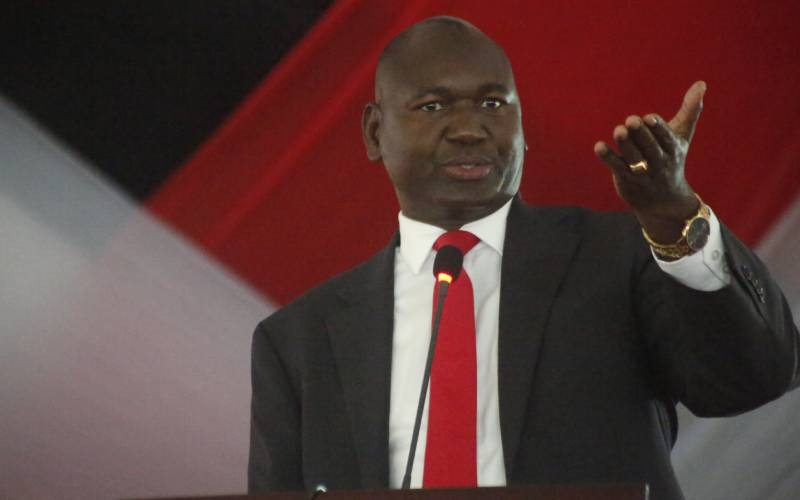
Meanwhile, Mudavadi has been meeting neighbouring presidents in preparation for a serious run at State House. His latest destination was Tanzania where he met President Jakaya Kikwete last week. In two weeks he will be in Rwanda. At a recent rally he signaled a shift from the run-off strategy to the new plot.
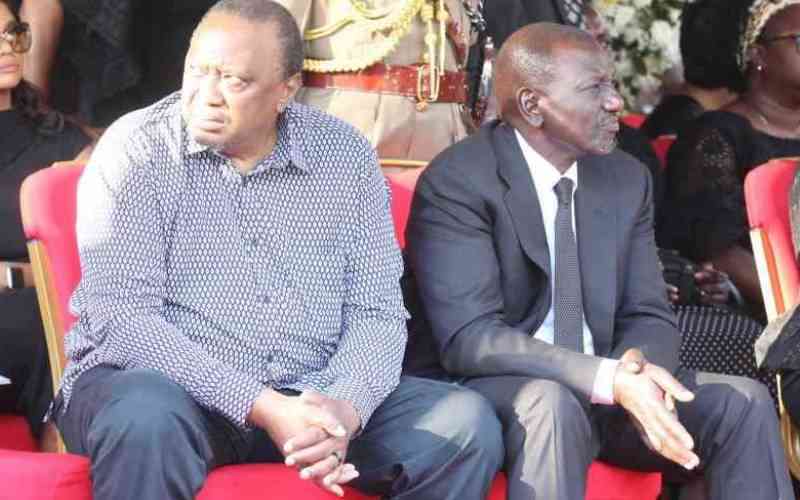
“I want to win in the first round,” Mudavadi said in Malava. “The game must be played within 90 minutes.” Observers say a loaded statement by Uhuru at the funeral of the former Internal Security minister George Saitoti hinted at the on-going manoeuvres. Uhuru said he is willing to put aside his ambition for the sake of the country. The statement and the revelation of an on-going plot to yoke Uhuru and Mudavadi have not gone down well with Ruto, who is working to strengthen his party, United Republican Party (URP). The Eldoret North MP seems to be sticking to the play first drafted by G7 strategists in which each candidate would give it their best shot in the first round, allowing for a joint candidate to emerge “organically” rather than through a pairing. Yesterday, Ruto was campaigning in Mandera after returning to the country from a foreign trip. Today, he will be in Wajir and later Garissa. When reached for comment, Ruto was non-committal on the latest development. Ruto said he was going ahead with his campaigns and was pleased URP is making inroads in North Eastern Kenya.
“I’m moving on with my party campaigns... As I’m talking to you now, (Wajir West MP Adan) Keynan and (Wajir South’s Mohammed) Sirat have joined URP,” he said. Ruto refused to be drawn into talking about the talks between Uhuru and Musalia. But key ally and Belgut MP Charles Keter said they were not in the arrangement adding that their focus was to popularise URP.
“We are not worried about that plot if Uhuru is working with Mudavadi we can also negotiate with others,” said Keter. The Belgut MP further said that URP can negotiate but only with parties and individuals willing to talk based on their worth and political value.His views were, however, in contrast with those of Konoin MP Julius Kones who declared Mudavadi is the man of the moment. “It is now clearer that it was not for nothing that Mudavadi exhibited absolute courage to walk out of ODM,” Kones said. “Now that everybody feels he is the best compromise candidate, I think we may have to convince Ruto to back him.”
Biggest threat
The MP argued that the entry of Mudavadi into the presidential campaign is likely to change the political scenario. Kones, a key strategist in Ruto’s camp, said that though there were no official talks between Ruto and Mudavadi on how to approach the coming elections there will be eventual demands for candidates to sacrifice their own personal interests. The involvement of Prof Nick Wanjohi and a Nyeri political activist in the talks surrounding the Mudavadi-Uhuru pairing has raised eyebrows. Ndaragwa MP Jeremiah Kioni, now supporting Mudavadi’s candidature, admits UDF has been in touch with Prof. Wanjohi and other civil servants from time to time.
“Yes, we consult Wanjohi from time to time because he is in the executive and we need his help here and there,” Kioni said. Mudavadi’s new party, formed for Uhuru, has also been linked to most of Kibaki’s men, including his nephew Laikipia West MP assistant minister Nderitu Muriithi. Kioni, however, said there was no agreement yet on who between Uhuru and Mudavadi should be the other’s running mate.
He added that it was their supporters who are demanding that they combine forces. “If Uhuru and Mudavadi run against each other then they should know that Raila will win without any doubt.
The biggest threat to a Raila presidency is Mudavadi and no one else,” Kioni said. Assistant Minister Kareke Mbiuki, however, dismisses claims that Uhuru was about to step down for Mudavadi adding that though the Deputy PM was willing to cede grounds such a move can only happen after he is defeated through a voting process.
“Mudavadi and his group should stop this wishful thinking that Uhuru will be cajoled into stepping down after a cup of tea or boardroom chat,” Mbiuki stated. “This will not happen.”