Your are here  » Home   » Special Reports

Government to construct more dams

Updated Saturday, May 26th 2012 at 00:00 GMT +3

By LILLIAN ALUANGA-DELVAUX

More than 900 dams and water pans have been constructed in the past seven years resulting in the harvesting of millions of cubic metres of rainwater.

The water reservoirs mainly put up in arid and semi arid lands around the country have collected 17 million cubic metres of water from the current rains — enough to serve 2.5 million people and two million livestock during the next drought period.

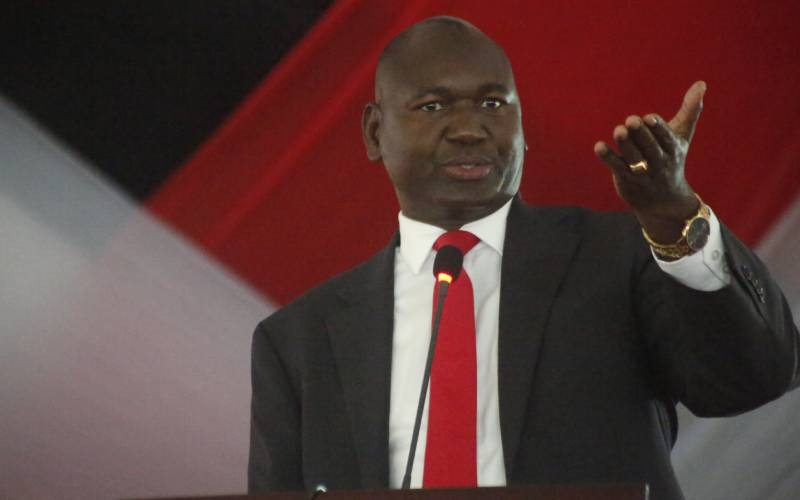
“In the last financial year alone we had about 77 small dams and water pans constructed or desilted to create a water storage capacity of 1.7 million cubic metres,” says Robinson Gaita, Director of Irrigation, Drainage and Water Storage, Ministry of Water.

Irrigation policies

Kenya has been described by the United Nations as among the most water scarce countries in the world, with at least 13 million people lacking access to clean drinking water. But the country is also estimated to have huge potential in harvesting rainwater. Nairobi, for instance, has the potential to supply water needs of between six and 10 million people with 60 litres of water a day. If effectively harvested, Nairobi could tap up to 10 million cubic metres of water each year from rooftops, roads, forest-covered areas, and open grounds.

While acknowledging that Kenya is a water scarce country, Engineer Gaita says a series of reforms in the water sector has seen the Government fund implementation of the Water and Irrigation Policies. The Water Policy is aimed at increasing access to safe and clean water, while the latter aims to scale up irrigation from the current 130,000 hectares to 540,000 hectares.

According to Gaita, improved policies within the water sector have led to an increase in funding in the past three years, from Sh2 billion annually in 2002, to the current Sh32 billion.

Currently, several water supply projects are under implementation in Nyeri, Nairobi, Nakuru, Kisumu, Kakamega, Garissa, Kapsabet, Embu and parts of the Coast Province. When completed, it is estimated that about 2.4 million people will have improved access to safe drinking water.

Kenya Water and Sanitation Network’s Steven Mutoro, however, says while the idea of putting up dams and water pans is laudable, there is much more that can be done at a smaller scale to encourage households to harvest rainwater.

“Dams and water pans are good as a long term plan but the flooding we have recently experienced in urban areas shows a lack of proper drainage for storm water, which can be harvested and stored for future use,” says Mutoro.

Mutoro, who is also the secretary general of Consumers Federation of Kenya, says while the Housing Bill requires people to harvest rainwater, more needs to be done besides establishing a legal framework.

GO TO PAGE 1 2 Next »
Comments in chronological order (Total 0 comments)


1100 characters remaining
 
Google+

Popular on Facebook

KCB 41.00 0.00
COOP 17.00 0.05
KPLC 17.15 0.15
ARM 70.00 1.00
EQTY 35.00 0.50
HFCK 25.50 0.00
KAPC 125.00 -1.00
KENO 10.95 0.15
KQ 11.30 0.00
MSC 4.45 0.05
SASN 13.50 -0.05
SCOM 7.25 0.00
Watch KTN Live Listen to Radio Maisha Live